

This St Patrick's Day, think twice before you raise a glass of that virtuous green juice.
I grew up Catholic in Northern Ireland. St Patrick's Day meant Mass, a parade if you were lucky, and (most importantly) a guilt-free pass to break your Lent fast. Because Lent is long. Technically, from Ash Wednesday to Easter Sunday is more than 40 days (the number of days Jesus fasted in the desert, hilariously often misspelt "dessert" when chocolate is on the line). So, many of us allowed ourselves a little break on the 17th of March. A strategic chocolate deployment, if you will.
But this post isn't about chocolate. Not really. It's about something far more insidious... something hiding behind a halo of health claims, Instagram aesthetics, and the colour green.
It's about spinach. And kale. And almonds. And sweet potatoes. And the smoothie you made this morning because you were trying to be good.
How I Fell Down the "Healthy Eating" Rabbit Hole
Way back in 2010, a particularly disciplined Lent (no cheats, no St Patrick's Day pass, no birthday exceptions... more on that story another time) accidentally revealed that chocolate was triggering my severe, persistent acne. Acne that had survived years of topical antibiotics, oral antibiotics, Roaccutane, the contraceptive pill, Chinese medicine, and a pharmacy's worth of other interventions. Acne that I'd been told I'd "grow out of." Acne that every single doctor assured me had absolutely nothing to do with diet.
They were wrong. Spectacularly, confidently, expensively wrong.
That discovery sent me tumbling into the world of ancestral nutrition. I thought I'd had this brilliant, original idea about eating what humans evolved to eat before farming came along. And then I discovered someone had already trademarked it. The paleo diet. Typical.
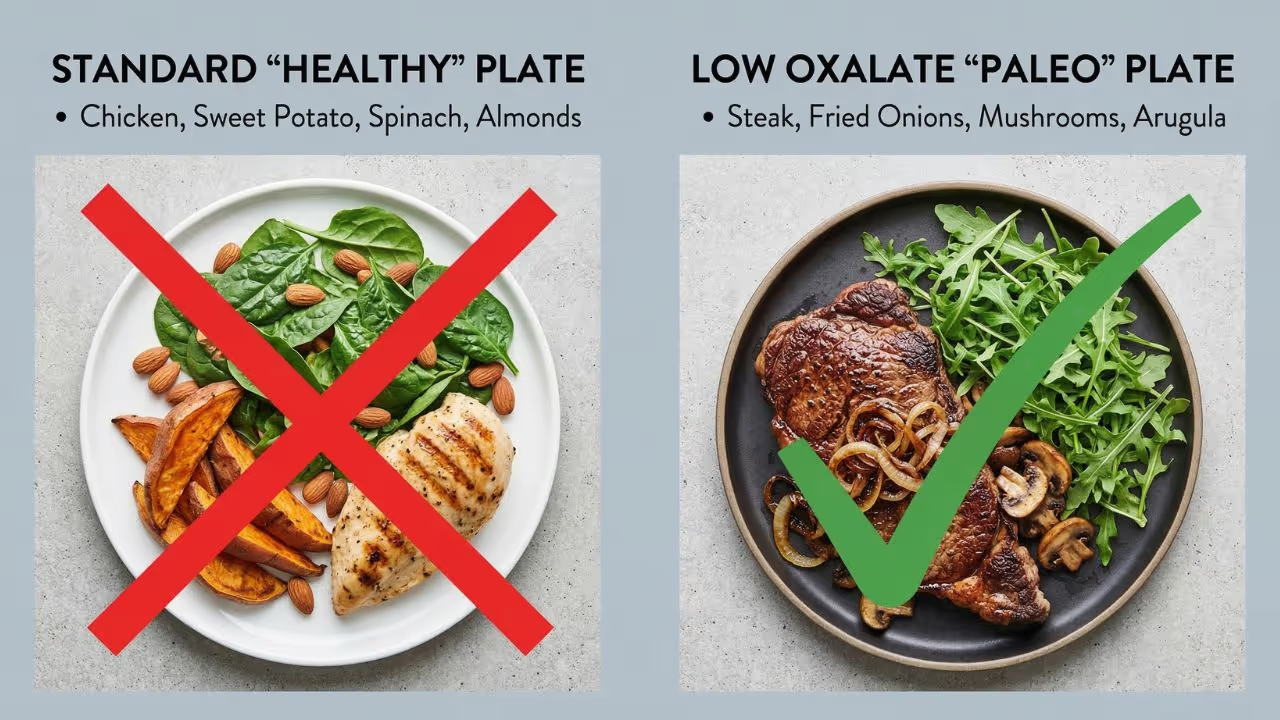
So, I went full paleo. And in the spirit of doing things properly, I went heavy on the plants. Green juices (which were really taking off in 2010) became a daily ritual. Sweet potatoes replaced white potatoes (because white potatoes weren't paleo, obviously). Almond flour crept into my baking. And spinach... oh, spinach was everywhere. Smoothies. Salads. Side dishes. Because green vegetable, right? Everyone was raving about spinach. Popeye ate it. It was practically a superfood. I was being so good.
My skin started glowing. I got off gluten. I started cooking from scratch. I even reintroduced whole milk after three years without it. Turned out that once I'd cleaned up my diet and gut, my dairy tolerance came back. I was on a roll.
And then, slowly, things started to unravel.
When "Good" Starts to Feel Bad
The fatigue crept back in first. Not the dramatic, can't-get-out-of-bed kind. The insidious, "I used to have more energy than this" kind. Then came the tingling in my feet. And an anxiety that felt... chemical. Not the "I'm worried about something" kind. The "something is wrong in my nervous system" kind.
I didn't connect it to my diet. Why would I? I was eating so healthily. All those greens. All those nutrient-dense plants. All that spinach.
That evil, evil spinach.

What Are Oxalates and Why Are They Harmful?
Nobody mentioned it whilst they were blending their green smoothies and posting them on Instagram. The word? Oxalates.
Oxalic acid is a compound found in many plant foods, particularly spinach, rhubarb, Swiss chard, beet greens, nuts (especially almonds), sweet potatoes, and dozens of other foods that have somehow earned "superfood" status. Plants produce oxalates as a defence mechanism. It's their way of saying "don't eat me"... a chemical weapon system that we've collectively decided to ignore because the marketing is so much prettier than the chemistry.
In small amounts, most people handle oxalates reasonably well. Your gut bacteria break some of them down. Your kidneys excrete the rest. No drama.
But when you're consuming spinach smoothies daily, snacking on almonds, swapping to sweet potatoes, baking with almond flour, and drinking almond milk (as so many health-conscious people do) you're carpet-bombing your system with oxalic acid. Day after day after day.
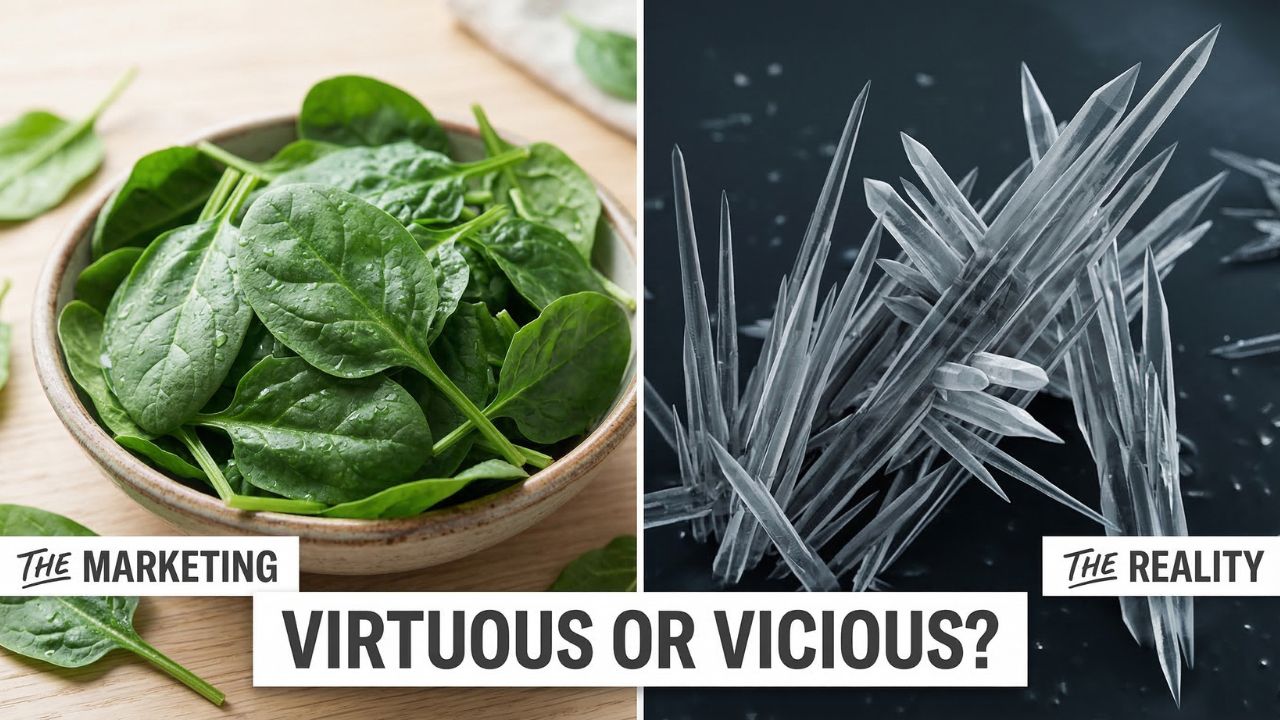
Now, here's where the basic chemistry matters. Oxalates can't form crystals on their own. They're negatively charged, so they will always attract positive charges. This is just how ions work. Calcium is the predominant positive charge in the body, which is why calcium oxalate crystals are the most common form. But calcium isn't the only cation that gets pulled in. Iron, zinc, copper, manganese... and heavy metals like aluminium, lead, mercury, and gadolinium (particularly from MRI contrast dyes) can all become incorporated into stored oxalate crystals within your cells and tissues.
"These crystals aren't just sharp… they're toxic storage units."
Dr Catriona Walsh
Think about that for a moment. These crystals aren't just sharp... they're toxic storage units. Microscopic vaults locking away not only minerals your body needs but also heavy metals and other toxic elements it's been trying to deal with. They can deposit in virtually any tissue: kidneys (hello, kidney stones), joints (hello, mysterious arthritis), skin, eyes, blood vessels, thyroid, bones, brain. They damage mitochondria, the tiny powerhouses in your cells that produce your energy. They irritate the gut lining. They trigger inflammation and immune responses. They can even mimic or worsen autoimmune conditions.
This is part of what I call the ATTRACT theory (more on that here), which describes how toxicity, nutrient depletion, inflammation, and immune dysregulation create a self-reinforcing cycle in the body. Oxalates are a critical piece of that puzzle. They don't just cause damage directly... they become part of the mechanism that traps the body in a state of chronic, compounding toxicity. A sort of toxic compound interest, if you will.
What are the symptoms of too much oxalate?
And the kicker? The symptoms are so varied and so seemingly unrelated that most doctors don't connect them. Fatigue, brain fog, joint pain, anxiety, skin issues, urinary problems, muscle aches, sleep disruption... sound familiar? Sound like a dozen other conditions? That's the problem. Oxalate toxicity hides in plain sight, dressed up as fibromyalgia, chronic fatigue, anxiety disorder, functional neurological disorder, or that catch-all favourite: "stress."

What Is Oxalate Dumping? (And Why It's About More Than Just Oxalates)
I'd heard of low-oxalate diets, but only in the context of kidney stones and a rare condition called interstitial cystitis. I didn't have kidney stones. I didn't have bladder problems. So, oxalates weren't my problem. Right?
Wrong.
It wasn't until years later, working with clients dealing with gadolinium toxicity and other complex health conditions, that the penny dropped. One or two clients had symptoms that nagged at me... symptoms that overlapped with what I was reading about oxalate toxicity. And then one particularly insistent client pointed me very firmly towards something called oxalate dumping, and I tumbled down yet another rabbit hole. (I've learned to listen very carefully when clients insist on things. They're living in their bodies. I'm not.)
Symptoms of Oxalate Dumping
"You're not just releasing one toxin, you're opening Pandora's crystalline box."
Dr Catriona Walsh
Oxalate dumping is what happens when you reduce your oxalate intake too quickly. Your body has been storing these crystals in tissues for years, sometimes decades. When the incoming supply drops suddenly, the body starts mobilising its stores, pulling crystals out of tissues and trying to excrete them. Which sounds like a good thing, until you experience it. The dumping process can cause excruciating pain, rashes, gritty or sandy urine, mood swings, insomnia, brain fog, joint flares, and a general feeling of being hit by a lorry.
But here's what most people don't realise: "oxalate dumping" is a shorthand. Remember those crystals that incorporate heavy metals and other toxic elements alongside the calcium and oxalate? When you mobilise or dissolve those crystals, everything that's incorporated in them starts to dissolve and disperse throughout your bodily fluids. Not just oxalates. Not just calcium. The heavy metals too. The gadolinium. The lead. The mercury. The aluminium. All of it, released back into circulation, hopefully (but not invariably) getting eliminated through urine, sweat, stools, and even hair, nails, and skin as they shed.
So, oxalate dumping is really a shorthand for dumping toxic positive and negative charges, which include (but aren't limited to) calcium and oxalates, and will also include varying amounts of heavy metals and other highly charged ions. The redistribution of all of these compounds adds to the dumping symptoms. And this is why oxalate dumping can feel so spectacularly awful... you're not just releasing one toxin, you're opening Pandora's crystalline box.
Many people, desperate to feel better once they discover oxalates, slash their intake overnight. Some switch to a carnivore diet cold turkey, which can be a brilliant approach for many health conditions, but going from a very high-oxalate diet to zero plant foods in one step is like slamming on the brakes at 100mph. The oxalate dumping can be severe. Others just try to cut out the obvious offenders all at once. Either way, they feel worse. Much worse. And they conclude the diet doesn't work. When actually, it's working too well, too fast.
And here's something even more counterintuitive: a small amount of dietary oxalate can actually shut down oxalate dumping. The body responds differently to oxalates coming in through your diet versus oxalates being released from your own tissues or made in your cells. The endogenous oxalates (the ones we make in our cells when our metabolism is more than a little "off") are far more mischievous than dietary ones. And when I say mischievous, I mean they're nasty little Gremlins... the murdering types, not the fun types. A controlled, gradual reduction keeps the dumping manageable. Going cold turkey can unleash chaos.
The dumping process can continue for unpredictable amounts of time. If you have substantial crystal deposits in your joints, bones, and skin, it may take years or even decades to fully clear them. This doesn't mean you're fated to experience daily severe dumping for that entire period. But it does mean you'll need to be careful with your diet and toxin exposures for the foreseeable future.
Of course, you don't need to do anything about your dietary oxalates. There are no oxalate police. You have choices. You can choose to do nothing, in which case your oxalate burden is likely to continue growing and accumulating in tissues... toxic compound interest. You could go cold turkey carnivore and take your chances with potentially triggering severe dumping (this doesn't happen to everyone going carnivore, but it can happen, and it's not pretty when it does). Or you can do it the controlled, gradual way. Even that isn't completely free from dumping risks. It becomes far easier when you have a guide who's walked that path and has some tricks up their sleeves to help reduce the severity of symptoms. But even then, you'll still have to do the hard work of calculating your current oxalate intake and mapping out how you'll gradually reduce it every week. And you will still likely have some oxalate-dumping episodes.
What This Has to Do with St Patrick's Day
You might be wondering what any of this has to do with the 17th of March, beyond the tenuous connection that Ireland is green and so is spinach.
Fair point. But bear with me.
St Patrick's Day has become, in the wellness world, a convenient excuse to double down on the green theme. Green smoothies. Green juices. Spirulina lattes. Matcha everything. Celery juice by the gallon, because a self-proclaimed medium (not the size... the spooky ability to FaceTime dead people) decided to use his remarkable gift of communing with the spirit world to... give dietary advice. The Medical Medium has millions of followers drinking 16oz of celery juice every morning on an empty stomach because a ghost told him it was a good idea. And that's before we get to his stance on avoiding animal products and loading up on plants.
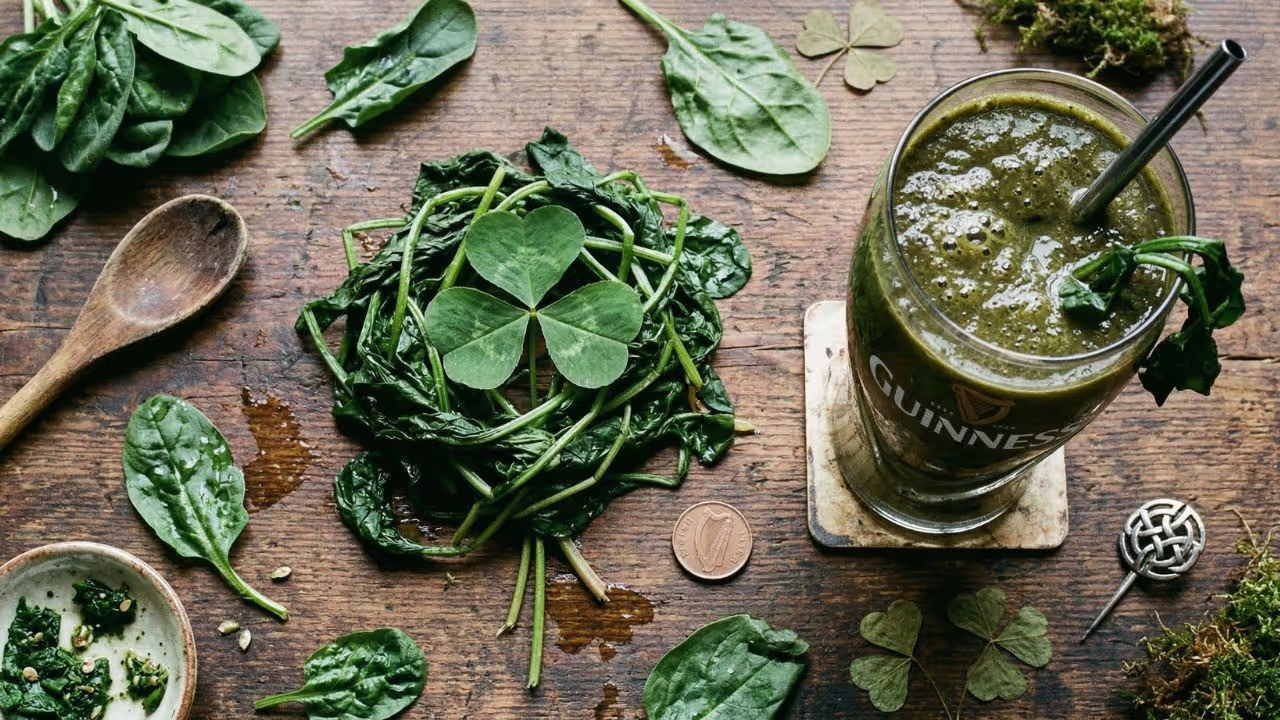
Speaking of celery... the celery juice trend comes with its own delightful side effects that nobody mentions. Celery contains psoralens, compounds that increase sun sensitivity. Workers who harvest celery in fields are prone to psoralen-induced burns on their hands on sunny days. And there's at least one published case of a woman who ended up in hospital with severe burns after consuming a large amount of celeriac (celery root) before a tanning bed session. Psoralens from the inside, UV from the outside. Not a combination you want.
"Eat your greens!" is practically a moral imperative at this stage. Social media is awash with influencers using the holiday as a hook to promote their latest green concoction.
But what if the greens you're eating aren't as benign as they look?
What if the spinach smoothie you're drinking because a wellness influencer told you it was good for you is actually filling your tissues with microscopic crystals? What if the reason you're tired, achey, anxious, and foggy isn't because you need more greens, but because you need fewer of certain ones?
What if the "healthy eating" advice that's been drummed into us for decades is actually making some of us sicker? That's the bit that makes me properly furious.
Which Foods Are Highest in Oxalates?
Before you panic and bin every vegetable in your fridge, let me be clear: this isn't an anti-vegetable screed.
Not All Greens Are Created Equal
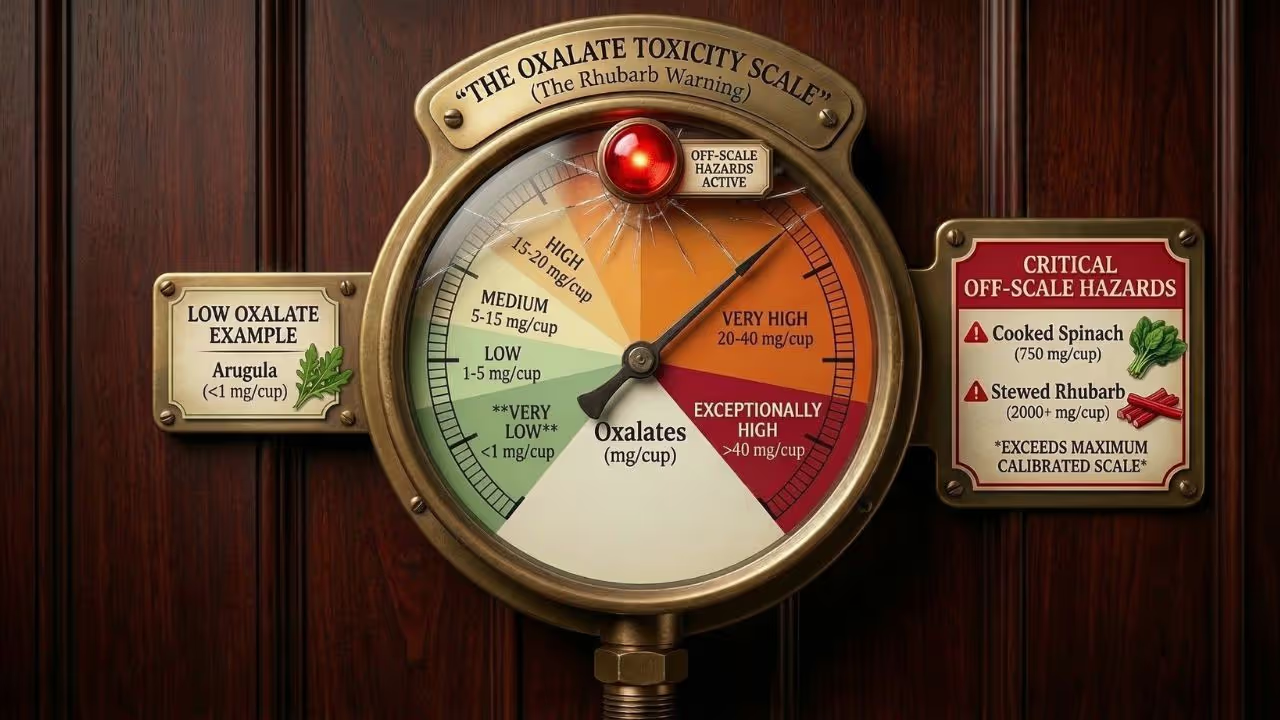
"Half a cup of cooked spinach can hit about 755mg of oxalic acid. A low-oxalate diet aims for under 50-100mg per day. Read that again."
Dr Catriona Walsh
What I am saying is that the blanket advice to "eat more greens" ignores some rather important biochemistry. Not all greens are high in oxalates. Lettuce, cucumber, cabbage, watercress, rocket, other cruciferous vegetables... all relatively low. Carrots are usually low to medium, though a few readings per serving creep into the high range. It's the specific high-oxalate foods that cause problems, and they're disproportionately the ones that get pushed as "superfoods."
"A cup of stewed rhubarb contains up to 2,064mg of oxalic acid. That's your entire allowance for three weeks in one dessert!"
Dr Catriona Walsh
The highest offenders include (and the numbers might shock you):
Spinach the undisputed heavyweight champion of everyday oxalate sources. A cup of raw spinach ranges from about 150-320mg of oxalic acid. But here's the catch: spinach wilts away to nothing when you cook it. Half a cup of cooked spinach can hit about 755mg... and half a cup of cooked spinach looks like a sad, stingy little heap on the side of your plate. So you pile more on. For context, a low-oxalate diet aims for under 50-100mg per day.
Rhubarb actually worse than spinach per serving. A cup of stewed rhubarb (without sugar) can contain up to 2,064mg of oxalic acid. That's your entire "allowance" for three weeks in one dessert!
Chaga mushroom and this is the one that will really raise your eyebrows. Chaga mushroom powder can be up to 14% oxalates in its dry form. That's 14,000mg per 100g. Published case reports in medical journals document people developing acute kidney failure from chaga consumption, including end-stage renal disease. Chaga tea is made by boiling the mushroom and (if you're being sensible) discarding the solids, which reduces the oxalate content of the liquid somewhat. But mixed mushroom teas are often not strained. I tried chaga tea myself, years ago, because it was the trendy "superfood" of the moment. Within a few days, I was getting cracking migraines. In retrospect, I now recognise those as oxalate toxicity. Thankfully, that's one healthy habit I kicked early.
Swiss chard and beet greens spinach's slightly less famous cousins, nearly as loaded
Almonds and almond flour the darlings of the gluten-free and paleo baking world
Sweet potatoes moderate to high, depending on the variety, and a staple for anyone who's been told to avoid white potatoes
Beetroot another "superfood" with a dark side
Dark chocolate yes, even the "healthy" high-cacao kind
White potatoes still surprisingly high unless you peel, chunk, and boil specific varieties (more on this below)
Oxalate Content Comparison Table
For perspective, a low-oxalate diet aims for under 50-100mg of oxalic acid per day total. Look at some of these single servings:
| Food | Serving Size | Oxalate Content (approx. mg) | Notes |
|---|---|---|---|
| Chaga mushroom powder | 100g dry | 14,000 | Published cases of kidney failure |
| Rhubarb (stewed, no sugar) | 1 cup | 2,064 | A week's "allowance" in one dessert |
| Spinach (cooked) | ½ cup | ~755 | Wilts to nothing… so you pile more on |
| Spinach (raw) | 1 cup | 150-320 | Varies by source and growing conditions |
| Swiss chard (cooked) | ½ cup | ~300-600 | Spinach's nearly-as-loaded cousin |
| Beet greens (cooked) | ½ cup | ~300-500 | Another "superfood" offender |
| Almonds | ¼ cup (35g) | ~130 | The darling of gluten-free baking |
| Sweet potato (baked) | 1 medium | ~100-150 | The paleo staple |
| Beetroot (cooked) | ½ cup | ~75-100 | Juice culture's favourite |
| Dark chocolate (70%+) | 1 oz (28g) | ~50-70 | Even the "healthy" kind |
| White potato (baked, skin on) | 1 medium | ~60-100 | Still high unless Idaho variety, peeled, chunked, boiled |
| Soy milk | 1 cup | ~30-50 | Common dairy substitute |
| Carrots | 1 cup raw | ~5-25 | Usually low-medium, occasional high readings |
| Rocket (arugula) | 1 cup raw | ~1-2 | A safe swap for spinach |
| Cabbage | 1 cup raw | ~1-2 | Very low |
| Watercress | 1 cup raw | ~1-2 | Very low |
| Lettuce (romaine) | 1 cup | <1 | Practically zero |
| Tiger nut milk | 1 cup | Very low | A good low-oxalate milk alternative |
| Coconut milk | 1 cup | Very low | Another safe milk option |
| Whole dairy milk | 1 cup | Very low | If you tolerate it |
A note on these figures: Oxalate testing is genuinely complicated. Numbers vary depending on growing conditions, plant variety, preparation method, testing methodology, and which lab did the analysis. Different published sources don't always agree, and the most detailed community-tested data isn't publicly available. The figures above are approximate ranges drawn from published research, university databases, and case reports… not proprietary data. They're useful for seeing the relative picture (spinach and rhubarb are in a completely different league from rocket and lettuce) but shouldn't be treated as precise, universal values. If you're seriously tracking your oxalate intake, you'll need more granular data than a blog table can provide… which is partly why I'm working on better tools. More on that below.
The Irony Is Not Lost on Me
"I traded acne for oxalate toxicity. I traded spots for tingling feet, fatigue, and anxiety. New toxins for old."
Dr Catriona Walsh

So here I was, all those years ago, having discovered that milk chocolate was triggering my acne. I cleaned up my diet. I went paleo. I replaced my trigger foods with "healthier" alternatives. And in doing so, I swapped one problem for another. I traded acne for oxalate toxicity. I traded spots for tingling feet, fatigue, and anxiety. A bit like Aladdin's mum when the peddler came calling out "new lamps for old"... except it was "new toxins for old."
Because nobody (not the doctors, not the nutritionists, not the wellness influencers, not the paleo community) was talking about oxalates in a meaningful way. Not for people like me, who didn't have kidney stones or bladder problems. The information was there, buried in research papers and niche forums, but it hadn't reached the mainstream. And arguably, it still hasn't.
I even used to recommend green smoothies to people. I cringe about that now. So sorry to everyone I suggested them to.
Is Celery Juice Actually Good for You? The Medical Medium Problem
Meanwhile, the green smoothie industrial complex rolls on. Spinach sales are booming. Almond milk is in every coffee shop. Sweet potato fries are on every "healthy" menu. And people are still dutifully necking celery juice every morning because a man who claims to receive medical insights from a spirit entity told them to... and somehow that's considered more credible than looking at the actual biochemistry of what happens when you flood your system with concentrated plant compounds on an empty stomach, day after day.
The problem with the Medical Medium isn't that he doesn't have qualifications (to be frank, I have serious reservations about how many qualified professionals use their credentials as appeals to authority whilst never scrutinising what they were taught). The problem is that his advice has no evidence behind it, no accountability when it harms people, and it funnels millions of followers towards exactly the kind of high-oxalate, nutrient-poor diet that creates the problems I see in my practice. When his followers get sicker, they're told they're "detoxing." Nobody's tracking outcomes. Nobody's adjusting. It's faith healing with a produce aisle aesthetic.

People who are trying desperately to do the right thing for their health are unknowingly loading themselves with compounds that might be contributing to the very symptoms they're trying to fix.
How to Reduce Your Oxalate Intake Safely
If any of this is ringing bells... if you've been eating a "healthy" high-plant diet and you're tired, sore, foggy, anxious, or dealing with mysterious symptoms that nobody can explain... here's where to start:
Don't panic-cut. This is the most important thing I can tell you. If you've been eating a high-oxalate diet for years, do not slash your intake overnight. The general guidance is to reduce by about 5-10% per week until you reach a low-oxalate diet. Yes, that's slow. Yes, it's frustrating when you just want to feel better. But your body needs that time to mobilise and excrete stored crystals (and everything trapped inside them) without overwhelming your system.
Track your intake. Start noticing which high-oxalate foods you're eating regularly. You might be surprised. That daily spinach smoothie, the almond milk in your coffee, the sweet potato with dinner... it adds up fast. Tracking does mean using spreadsheets, and I know from experience that many people find this bit difficult. (I've actually put together a short survey to find out how people are struggling with counting their daily oxalate intake and planning their reductions safely. If you've got two minutes, I'd love your input.)
Swap wisely. Replace high-oxalate greens with lower-oxalate options. Spinach out, rocket or watercress in. Almond milk out, coconut milk, tiger nut milk, or whole dairy (if you tolerate it) in. As for potatoes... It's complicated. White potatoes got demonised by the paleo movement, but the reality is more nuanced than "swap sweet for white." White potatoes are still quite high in oxalates unless they're specific varieties that have been peeled, chunked, and boiled (which leaches a good amount of the oxalic acid into the cooking water). Boiling may also help reduce oxalates in sweet potatoes somewhat. And there's a theory that slightly fermenting potatoes before cooking can reduce oxalate content further, along with lowering the carbohydrate content a little. I've done this in the past... it works, but it does take extra time and effort. And none of this stops white potatoes from being a nightshade vegetable.
Support your body. Adequate calcium (ideally from food, taken before or with high-oxalate meals) can bind oxalates in the gut before they're absorbed. Stay well hydrated. Support your gut bacteria. Oxalobacter formigenes is a bacterium that specifically breaks down oxalates, and it's one of the first casualties of antibiotic use. Which is ironic, given how many people with mystery symptoms have had multiple courses of antibiotics.
Watch for false dawns. Some people notice early improvements when they shake up their diet, cut out inflammatory foods, and reduce some toxins. Brilliant. But watch for changes over the longer term too. Because you can find yourself sinking lower and lower, putting it down to other things, when the thing you were doing that seemed to help initially (and that EVERYONE who's meant to be an expert and their mother tells you is safe) eventually turns out to be the thing causing you harm.
Get proper guidance. Oxalate reduction, especially from a long-term high-oxalate diet, is genuinely tricky. The dumping process needs managing. Your nutrient intake needs rebalancing. And if you're dealing with other conditions (gadolinium toxicity, mast cell activation, histamine intolerance, EDS) then you need someone who understands how all these pieces fit together, not a one-size-fits-all protocol from the internet. Or from a ghost. If you're not sure where to start, I offer a free clarity call where we can talk through what's going on and figure out whether I can help.
The Real Message This St Patrick's Day
"Sometimes the thing you're doing to be healthy is the thing that's making you sick."
Dr Catriona Walsh
This St Patrick's Day, whilst everyone else is going green, maybe pause and think about what "green" actually means for your health. Not the Instagram version. Not the influencer version. Not the spirit-guide version. The actual, biochemical, evidence-based version.
Because sometimes the thing you're doing to be healthy is the thing that's making you sick. And sometimes the bravest, most rebellious thing you can do for your body is to question the advice that everyone else is following without thinking.
The Irish have a long history of rebellion. Consider this yours.
Sláinte... but maybe hold the spinach.
If This Resonated...
Talk to me. If you've been eating "all the right things" and feeling worse instead of better, you're not imagining it, and you're not alone. I work with people navigating exactly this... oxalate toxicity, gadolinium toxicity, mystery symptoms that nobody can explain. Book a free clarity call, and let's figure out what's going on.
Fill out the survey. I want to build better tools for tracking oxalate intake because the current options are rubbish. Two minutes of your time will help me help you.
Share this post. If you know someone who's living on green smoothies and wondering why they feel terrible, send them this. They might not thank you immediately. But they might thank you eventually.
About Catriona Walsh: Catriona is a nutrition and lifestyle coach with a medical background, specialising in complex cases including gadolinium toxicity, oxalate toxicity, EDS, and the conditions that conventional medicine can't (or won't) explain. She runs The Food Phoenix's Ancient Body, Modern World programme, helping the medically homeless find their way back to health. If any of this resonated, you can find her at thefoodphoenix.com.
Coming next: "The Lent That Changed Everything: How Giving Up Chocolate Accidentally Cured My Acne"... the full story of how one no-cheat Lent accidentally exposed the biggest lie my dermatologists ever told me. And yes, I'm still not telling you how old I was.
"The Irish have a long history of rebellion. Consider this yours."
Dr Catriona Walsh
Frequently Asked Questions About Oxalates
What are oxalates and why are they harmful?
Oxalic acid is a compound found in many plant foods. Plants produce it as a defence mechanism… their version of "don't eat me." In the body, oxalates form tiny, sharp crystals that can deposit in tissues (kidneys, joints, skin, brain, blood vessels, thyroid, bones) causing inflammation, pain, and dysfunction. They also bind essential minerals like calcium, iron, and zinc, making them unavailable to your body.
Which foods are highest in oxalates?
Chaga mushroom powder is one of the most extreme sources (up to 14,000mg per 100g dry weight… yes, really). For everyday foods, rhubarb tops the list (up to 2,064mg per cup when stewed), followed closely by cooked spinach (about 755mg per half cup). A cup of raw spinach ranges from 150-320mg. Other high-oxalate foods include Swiss chard, beet greens, almonds and almond flour, sweet potatoes, beetroot, dark chocolate, soy products, and many nuts and seeds. White potatoes are also surprisingly high unless specific varieties are peeled, chunked, and boiled. A low-oxalate diet aims for 50-100mg per day total.
Can green smoothies actually be bad for you?
If they contain high-oxalate ingredients like spinach or beet greens, consumed daily, yes. The oxalate load adds up quickly and can exceed safe levels many times over. Juicing is particularly problematic because it concentrates the compounds and strips out the fibre. Swapping to lower-oxalate greens like rocket, watercress, or romaine lettuce is a simple fix. But rather than blending green smoothies, which only appeared for the first time in the human diet in the 1980s, and which can concentrate more plant antinutrients than oxalates, why not consume your vegetables and fruits the way our ancestors always did? In salads, stews, side dishes, raw, or cooked simply at home?
What are the symptoms of oxalate toxicity?
Fatigue, brain fog, joint pain, anxiety, skin issues, urinary problems (including kidney stones), muscle aches, sleep disruption, tingling or numbness, eye problems, and thyroid dysfunction. Because symptoms are so varied, oxalate toxicity is often misdiagnosed as fibromyalgia, chronic fatigue syndrome, anxiety disorder, or dismissed as "stress."
What is oxalate dumping?
When you reduce oxalate intake after years of high consumption, the body starts mobilising stored crystals from tissues. But "oxalate dumping" is actually a shorthand for something bigger. Oxalate crystals don't just contain oxalate and calcium... they can also incorporate heavy metals (aluminium, lead, mercury, gadolinium from MRI dyes) and other toxic elements. When the crystals dissolve, everything trapped inside them gets released back into circulation. Symptoms can include pain, rashes, gritty urine, mood swings, insomnia, brain fog, joint flares, palpitations, dry skin, and worse. The general guidance is to reduce intake by about 5-10% per week. Going cold turkey can unleash chaos, because a small amount of dietary oxalate can actually help keep the dumping process in check.
Can switching to a carnivore diet trigger oxalate dumping?
Yes, and this catches a lot of people out. A carnivore diet can be a brilliant approach for many health conditions, but going from a very high-oxalate diet to zero plant foods in one step is like slamming on the brakes at 100mph. The sudden elimination of all oxalate intake can trigger severe dumping symptoms. If you're considering carnivore and you've been eating a high-oxalate diet, reduce your plant oxalate intake gradually first.
Are sweet potatoes healthier than white potatoes?
Not necessarily. Sweet potatoes are moderate to high in oxalates, and white potatoes (whilst also quite high) can be reduced significantly if you peel, chunk, and boil specific varieties. The boiling process leaches oxalic acid into the cooking water, which you then discard. The demonisation of white potatoes (particularly in paleo circles) pushed many people towards sweet potatoes as the "healthier" option, but the oxalate picture is more nuanced than that.
Is chaga mushroom safe?
Chaga mushroom powder can contain up to 14% oxalates by dry weight (14,000mg per 100g), making it one of the most concentrated sources of oxalic acid you can consume. There are published case reports of people developing acute kidney failure and even end-stage renal disease from regular chaga consumption. If you're already dealing with oxalate issues, kidney problems, or a high-oxalate diet, chaga may be best avoided entirely.
Is spinach really that bad?
Spinach is exceptionally high in oxalates, far higher than most other vegetables. A cup of raw spinach contains 150-320mg of oxalic acid, but the real problem is cooked spinach: because it wilts away to almost nothing when heated, half a cup of cooked spinach can hit about 755mg. And half a cup looks tiny on a plate, so most people pile on more. The oxalic acid also binds to many of spinach's own nutrients (particularly calcium and iron), reducing their bioavailability. The net nutritional benefit is far less impressive than its reputation suggests.
Is celery juice actually good for you?
Celery itself is relatively low in oxalates compared to spinach, but juicing concentrates the compounds and strips out the fibre. Drinking 16oz of celery juice daily (as the Medical Medium recommends) means consuming large quantities of concentrated plant compounds on an empty stomach, day after day. Celery also contains psoralens (which increase sun sensitivity and can cause burns in combination with UV exposure) and apigenin (which can interact with medications). In moderation, celery is fine. As a daily therapeutic protocol based on advice from a self-proclaimed spirit medium rather than clinical evidence? That's a different proposition entirely.
What is the Medical Medium and should I follow his advice?
Anthony William, known as the Medical Medium, claims to receive medical information from a spirit entity. His advice (heavy on plants, celery juice, and avoiding animal products) has gained millions of followers. The problem isn't about qualifications… plenty of qualified professionals repeat harmful dogma without scrutinising it. The problem is that his advice has no evidence behind it, no accountability when it harms people, and it funnels followers towards exactly the kind of high-oxalate, nutrient-poor diet that creates the conditions they're trying to fix. When followers get sicker, they're told they're "detoxing." Nobody's tracking outcomes. Nobody's adjusting.
How do I track my oxalate intake?
Tracking oxalate intake means logging what you eat and cross-referencing it with oxalate content data, which typically involves spreadsheets. Many people find this difficult, and there aren't many user-friendly tools available yet. If you're struggling with tracking your daily oxalate intake or planning safe reductions, this short survey is helping me understand what people need so I can build better resources.
How long does it take to see improvement on a low-oxalate diet?
It varies enormously depending on how much oxalate has accumulated, how quickly you reduce intake, and individual factors like gut health and kidney function. Some people notice improvements within weeks; others take months. The dumping process can make things temporarily worse before they improve, which is why gradual reduction (about 5-10% per week) with proper guidance is important.
Can I still eat vegetables on a low-oxalate diet?
Absolutely. Plenty of vegetables are low in oxalates: lettuce, cucumber, cabbage, watercress, rocket, broccoli, cauliflower, courgette, peppers, peas (apart from sugar snap), and more. It's about choosing wisely, not eliminating vegetables entirely.