2020 was a troubling year, with challenges aplenty outside and at home, including your own well-being. One of the greatest challenges was trying to avoid anxiety. In 2013, there were 8.2 million cases of anxiety disorder in the UK. Whilst about 40 million American adults (roughly 18% of the population) were diagnosed with an anxiety disorder.
But in 2020, these anxiety figures shot up. The management of the COVID-19 pandemic was largely responsible for this. The uncertainty surrounding who was deemed to be at increased risk of severe COVID, combined with social isolation, grief from losing family and friends, and the effects of a major recession or even financial depression, took its toll on people’s mental health. Routine and even urgent health care were often sidelined, leaving the focus primarily on COVID-19, to the detriment of other conditions, especially mental health conditions like depression and anxiety.
Does extra time spent at home make it harder to avoid anxiety?
Restrictions on movement caused by lockdowns, who you can see, and how you spend your leisure time forced us to spend more time at home. Sometimes this happens during the workday, and almost always in isolation. Fear gripped the world, thanks to something celebrity Denise Walsh labelled ‘fearmongering’ instigated by mainstream media.
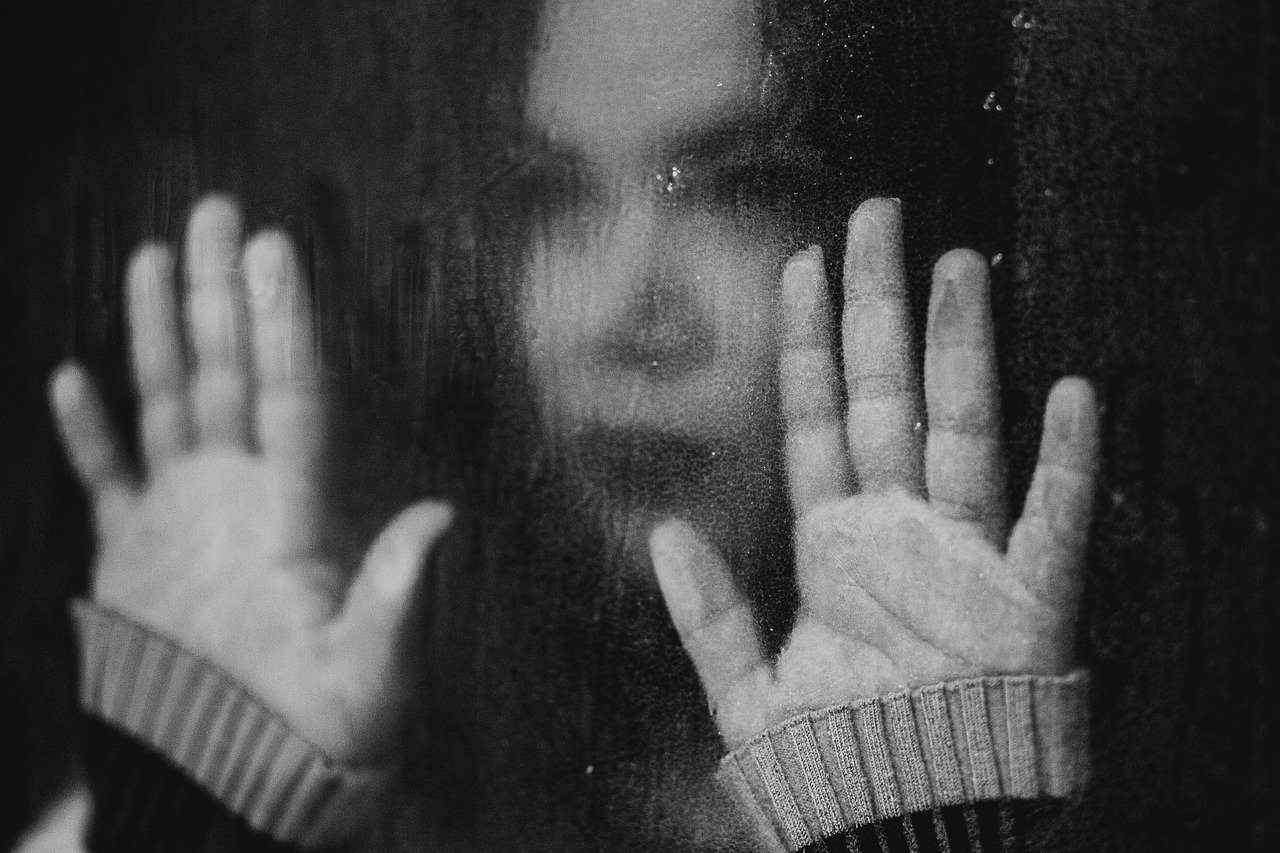
It’s easy to retreat into a dark space at home. Minor concerns can become exaggerated. We all tend to worry about the worst-case scenario. But for those living alone, anxiety and worry are especially dangerous. Isolation can leave you with little reassurance about the world. In that situation, every occurrence or challenge you meet day-to-day can cause anxiety. As I examine in The Food Phoenix, chronic stress can leave you feeling physically, emotionally, and mentally exhausted. If that sounds like you, if fear seems to rule your life and you feel anxious at home, then I have some steps you can take to alleviate worry in the future. These practical steps can help you feel more at peace in your home and sanctuary, as well as in the world itself.
How The Media Contributes To Symptoms Of Anxiety
Try to limit your exposure to the media, who enhance fear and concern by repetition and conjecture. The media sensationalises the news to grab your attention. This harnesses viewers, keeping you glued to your TV or device. And as a result, it’s almost impossible to avoid anxiety.
Expert opinions may also introduce bias. Opinions are only that; what someone thinks. They don’t always reflect how the world is. In 1931, mathematician Alfred Korzybski presented a paper in which he introduced his key idea –- the map is not a territory. How you see the world is not how the world is; it is how you perceive it. Social contagion describes how ideas and emotions catch on and spread like infections. So it’s easy to get caught up in hysteria. Remember that ideas you hear from the media are only that, not an indication of how the world is. Limit your exposure to other people’s opinions, not just experts but also those on social media.
Community Support
Whether you live alone or with a wider family group, having some community support is crucial for your mental health and well-being. Find someone in your support network you trust to buddy up with and check in on every couple of days. Set an intention to talk about life outside of the main news. Have conversations that don't recycle the fear you see or hear on TV. Pick people who can listen and, in turn, also listen to others. If you have anxiety about your home or a situation within it, share that. It might be the case that your buddy has the same. Social interactions where you can share your concerns help decrease feelings of isolation. They might also have practical advice to help you get through the next day, week or month. This can bring an accompanying sense of relief.
Separation as a way to create boundaries to reduce stress
It might seem odd suggesting separation as a way of reducing anxiety, but this is connected to working from home more than anything. If you are at your desk working all day, ensure you can close that element of your life off at night by creating boundaries. When you work from home, there is a temptation to answer one more email or pick up the phone if it rings out of hours, but do not. That pressure of being on-hand 24 hours a day can make your life miserable. If you have an office at home, close the door. If you have a work laptop, turn it off and put it away. Work and leisure time should be clearly defined for your mental wellbeing.
For more practical advice on fitting self-care into a day that already feels full, download my free guide, 67 Quick and Easy Self-Care Activities. Most of them take minutes, and none of them requires you to already feel well.