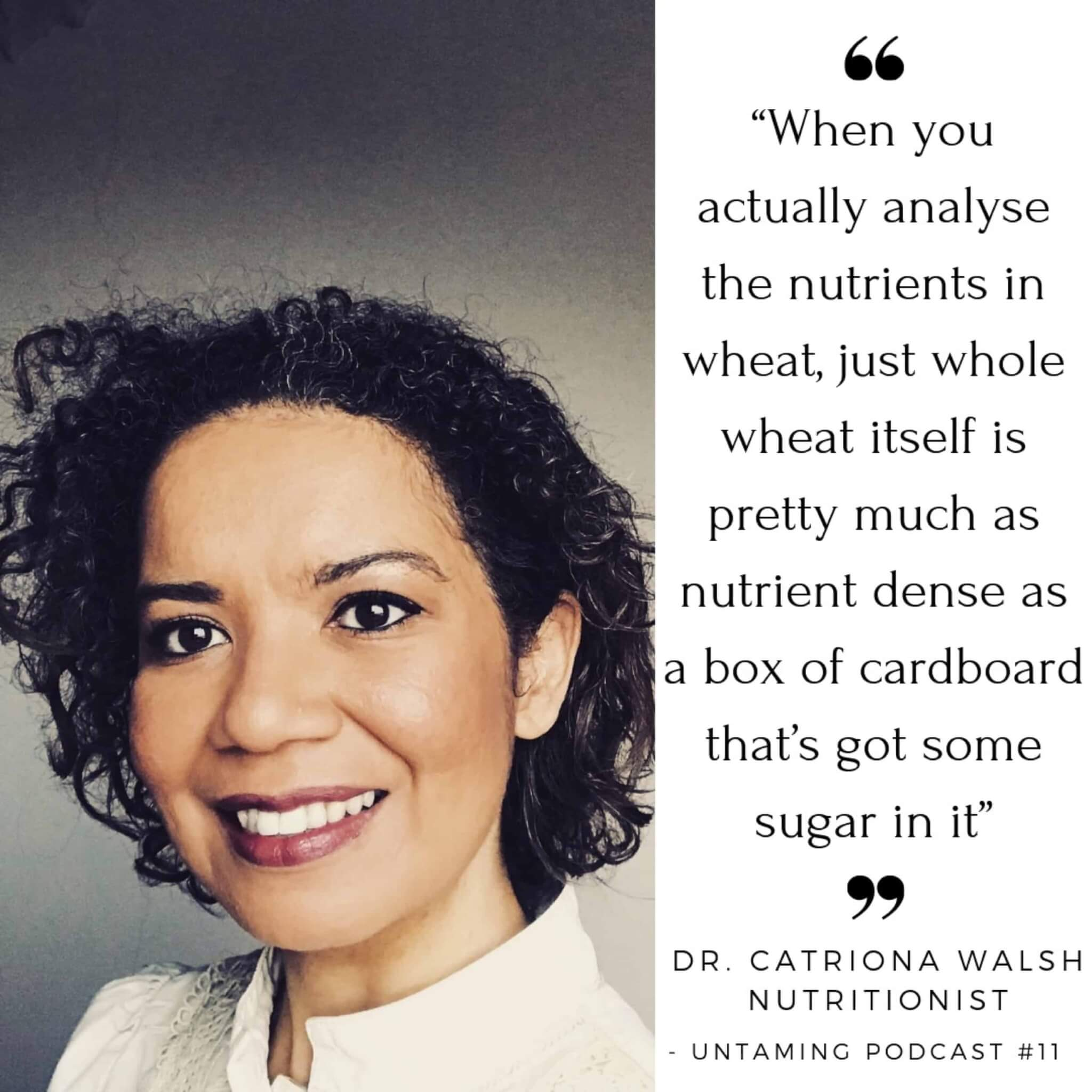
Are Your Kids Really Eating Nutritious Food – Podcast
I’m absolutely delighted to be able to bring you this podcast on children’s nutrition.
Tune in to learn more about children’s nutrition
I really loved chatting with Emily Giles of the Untaming Podcast about all sorts of things relating to nutrition, but with a special focus on children’s nutrition.
Emily and I live on opposite sides of the world. She’s in New Zealand, and I’m in Northern Ireland. But we were brought together by a passion for good, healthy food, regenerative agriculture and an appreciation of the importance of great quality nutrition throughout our lifecycles, starting from preconception and continuing throughout childhood and into adulthood.
In fact we’re both so passionate about these things that when we got started chatting it was hard for me to stop. We ended up covering a huge amount of ground, including:
how heavy metals, like lead and arsenic, are lurking in many of the foods we feed our kids and ourselves,
the lack of high quality research to back up the UK and USA dietary guidelines,
eating nose to tail,
what’s happened to the diversity of our diets (we even managed to mention the Hadza hunter-gatherers in Tanzania, and the Inuit),
glyphosate, the active ingredient in the herbicide in roundup, and how it can negatively impact food quality and health,
fibres and Jerusalem fartichokes (that’s what we called them at home because of their unfortunate effect on your digestion
my pet dietary peeves (which largely translates as the things I hate about typical conventional dietary guidelines),
and a whole lot more.
In all seriousness, cardboard is higher than whole wheat in several nutrients
I’ve just been reminded that most people don’t realize that cardboard (which contains the pulp of the stems, or trunks, of trees) also contains minerals. That is to say that cardboard is made from wood chip because it’s a really good source of fibre, and that’s what you need to make cardboard.
So, this is just a reminder that whole grains are considered more nutritious than refined grains because the presence of fibre increases the content of vitamins and minerals.
This is because vitamins and minerals are incorporated into the fibres. Fibres in plants are not, in fact, 100% cellulose or any other carbohydrate fibre.
Plants are highly complex organisms with varied requirements, and fibres are often parts of their cell walls. Minerals help to maintain the strength and integrity of fibres and give them resilience. A tree trunk isn’t just bigger and stronger than a stick of celery simply because it has a wider diameter. Meanwhile, the cells in the trunks are metabolically very active. They have to help transport nutrients and water up and down between the leaves and roots and withstand storms whilst being hardy enough to withstand infections from moulds, fungi and microbes.
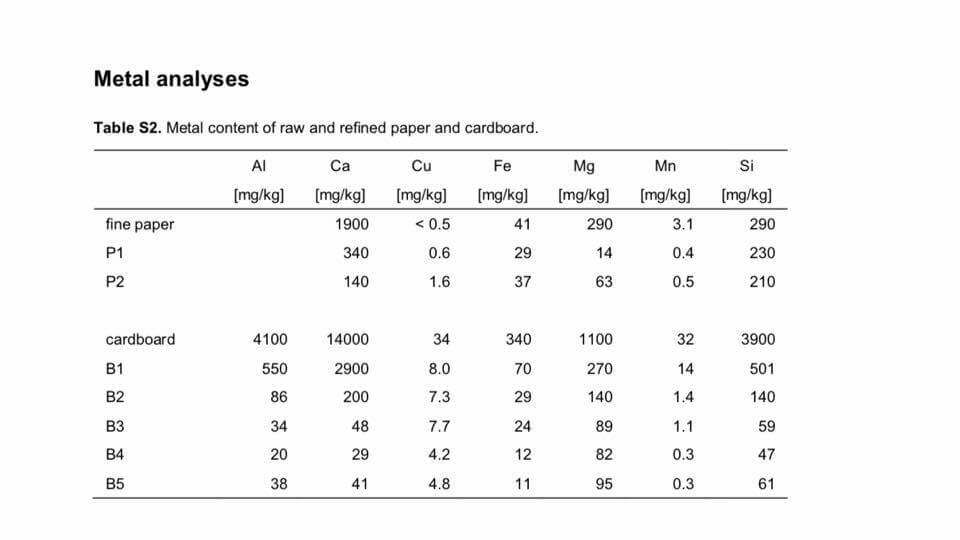
In fact cardboard contains considerably more calcium, iron and silica than whole wheat. But it’s also a source of aluminum and other heavy metals. The table is pulled from the supplementary section of this article. You can compare it with the analysis for Shredded Wheat Miniatures here. Just don’t forget to standardise the amounts of each.
Having said that, I’m not saying you should eat cardboard. Clearly you shouldn’t. It’s very unhealthy. Although it probably appeals to calorie counters. Of course, you also shouldn’t count the calories in your food since it’s an unhelpful, pseudoscientific thing to do. And you certainly shouldn’t teach your kids about counting calories. Here’s why.
But even whole wheat is surprisingly nutrient-poor, even compared with cardboard, which is not something that we tend to think of as being a good source of nutrition.
Wheat does contain more poor quality, inflammatory, incomplete protein than cardboard as well. That probably doesn’t work much in its favour, to be honest.
So have a listen and drop your comments below.
Do you think that childhood nutrition is important?
What do you think about the fact the standard first foods that we give our kids are loaded up with heavy metals (arsenic in baby rice and lead in bread and rolls)?
Do you need any advice about children’s nutrition? Contact me here.
What sort of struggles have you faced getting kids to eat a variety of real foods?
I’ve written more about how our pseudoscientific dietary guidelines are contributing to the burden of ill health by causing malnutrition in this post. What do you think about our dietary guidelines?
I’ve also written about the sustainability issues arising from industrial plant agriculture here. Have you heard of regenerative agriculture before?Do you often think about where your food comes from?
Click here for Untaming Podcast: Are Your Kids Really Eating Nutritious Food?
If you’re interested in learning more about how heavy metals, other toxins, and your diet and lifestyle choices impact your metabolism via your mitochondria and what you can do about it, then this is the post for you.
To listen to the podcast episode, click the link below.